
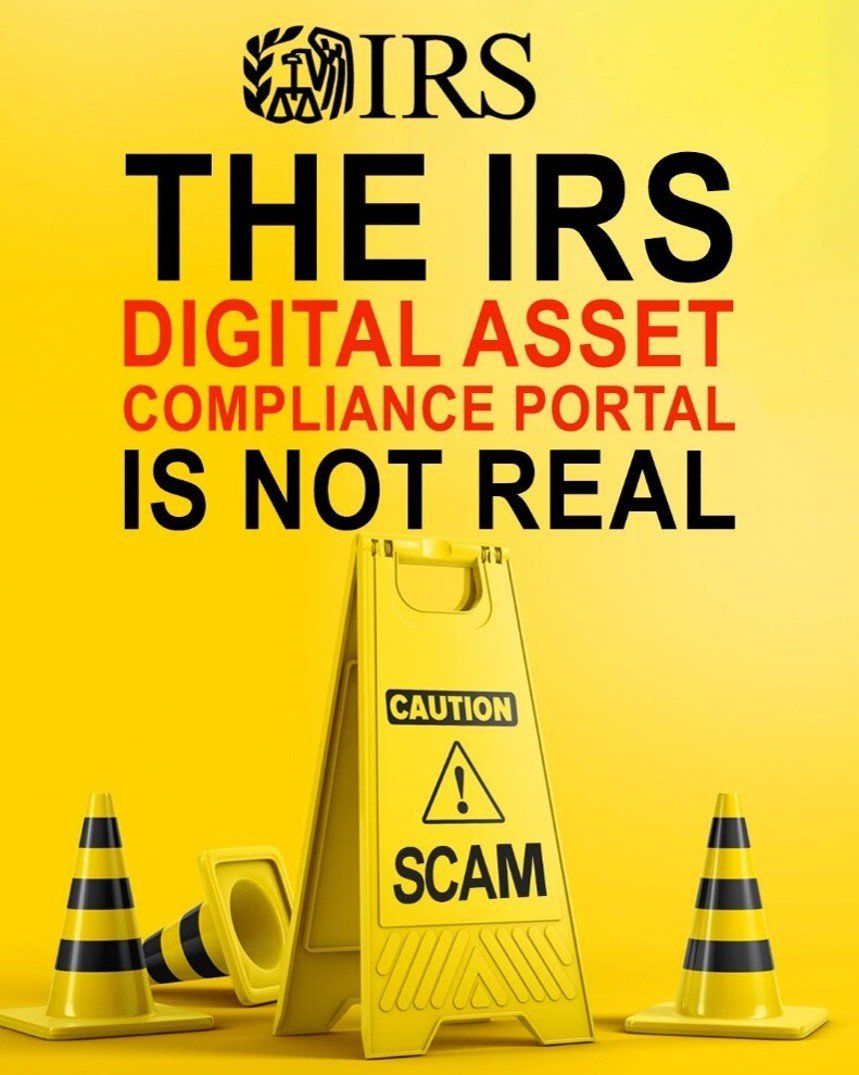
 If you own cryptocurrency and a letter arrived in the mail telling you to scan a QR code and enroll in an IRS “Digital Asset Compliance Portal” before a deadline, here is the short answer:
That letter is fake. The IRS does not operate a Digital Asset Compliance Portal. Do not scan the QR code and do not enter any information.
IRS Criminal Investigation issued a fraud alert about this scheme on July 30, 2026, and the letters are still arriving.
What the fake letter looks like
This one is more convincing than most tax scams, and for a specific reason: it comes through the mail. Most of us have learned to be suspicious of unexpected emails and texts. A printed letter that looks like it came from a federal agency gets past that instinct — and it gets past spam filters entirely, because there aren’t any on your mailbox.
The letters that have been reported share several features:
- They closely mimic the look of genuine IRS correspondence
- They reference tax years somewhere in the range of 2017 through 2026
- They carry a notice number that looks official but isn’t real
- They set an urgent deadline, often in early or mid-September
- They include a prominent QR code with instructions to scan it
Scanning the code takes you to a website built to look like IRS.gov. It isn’t. The domain is a look-alike, and it has been traced to servers previously used in financial phishing operations.
What the fake site asks for
Once you’re on the counterfeit site, it may ask for:
- Your personal identifying information
- Cryptocurrency wallet addresses
- Exchange account credentials
- Private keys or recovery phrases
Any one of those is enough to do real damage. Wallet credentials and recovery phrases in particular allow direct theft — crypto transactions can’t be reversed the way a fraudulent credit card charge can.
In some reported cases, submitting information was followed by a phone call from someone posing as an IRS official, applying pressure to keep the victim moving.
The QR code question, answered properly
A lot of the advice circulating about this scam says “never scan a QR code from the IRS.” That’s not quite right, and the nuance matters.
The IRS does use QR codes on some legitimate correspondence — CP53E notices, for example. So a QR code on an IRS letter is not by itself proof of fraud.
Here’s the distinction worth remembering:
The IRS will never ask you to enroll in a portal to avoid a penalty, and will never ask for wallet addresses, exchange logins, private keys, or recovery phrases through any channel. Not by mail, not by email, not by phone.
The safer habit, regardless: don’t scan QR codes from unsolicited mail. If you get a letter you think might be genuine, type IRS.gov into your browser yourself and look up the notice number there, or call the IRS using a number from their website rather than one printed on the letter.
What to do if you got one of these letters
If you haven’t responded: Don’t. Don’t scan the code, don’t call any number printed on the letter, don’t reply. You can report it to IRS Criminal Investigation at IRS.gov/SubmitATip.
If you already scanned the code or entered information:
- Stop communicating with anyone connected to the letter
- Change the passwords on any affected financial or exchange accounts immediately
- Contact your cryptocurrency exchange right away if you shared login credentials
- If you shared a private key or recovery phrase, move your assets to a new wallet now
- Keep the letter, and take screenshots of anything you submitted — it’s evidence
- Report it to IRS-CI at IRS.gov/SubmitATip
You can read more about this and other current schemes at IRS.gov/scams.
How to tell a real IRS letter from a fake one
Worth knowing generally, not just for this scam:
- The IRS contacts you by mail first. They don’t open with a phone call, text, email, or social media message.
- Real notices have a notice number in the upper right, usually beginning with CP or LTR. You can look that number up on IRS.gov.
- The IRS doesn’t demand a specific payment method or ask for card numbers over the phone.
- The IRS doesn’t threaten to have you arrested over a tax bill.
- Real correspondence gives you appeal rights. Scam letters manufacture urgency instead.
If you’re not sure, ask before you act
Scam letters work by making you feel like you have to move fast. You don’t. The IRS will still be there tomorrow, and so will any real deadline.
If you’ve received something that claims to be from the IRS and you’re not sure what to make of it, we’re happy to take a look. Bring it by our Elizabethtown office or send us a photo. It takes a few minutes to tell you whether it’s genuine, and there’s no charge for a question like that.